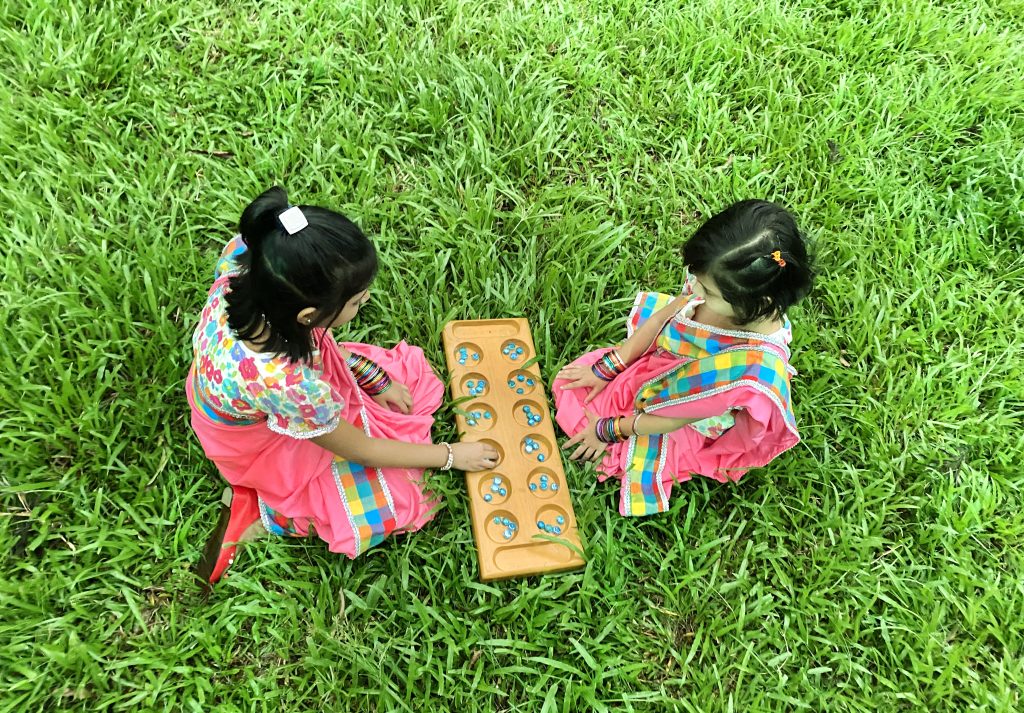
Mangala, also known as Mancala, is one of Turkey’s traditional games and was widely popular during the Ottoman Empire. Today, it is recognized as a strategic traditional sport in many countries around the world. According to Turkish ethnologist Metin And, the game may be related to the “mancala” mentioned in The Arabian Nights (Fifteenth Night), one of the earliest literary accounts of mancala-type games. Mangala was also depicted in Turkish paintings as early as the 16th century.
Mangala has been officially inscribed on the UNESCO Representative List of the Intangible Cultural Heritage of Humanity. The application, titled “Toguz Korgool / Toguz Kumalak / Mangala / Göçürme: The Traditional Game of Strategy and Intelligence,” was submitted jointly by Kazakhstan, Kyrgyzstan, and Turkey through the World Ethnosport Confederation. At UNESCO’s fifteenth session of the Intergovernmental Committee for the Safeguarding of the Intangible Cultural Heritage, Mangala was formally recognized and added to the list.
In Bangladesh, Mangala is a new and innovative game introduced under the dynamic leadership of sports enthusiast Md Al Mamun through the International Ethnosport Bangladesh Association. The game can be played anywhere with minimal expense and helps enhance cognitive ability, strategic and creative thinking, and social skills. Played with 48 stones by either two players or two teams, the game board consists of 12 small pits arranged in two rows and two larger storage wells. Each small pit begins with four stones, while the storage wells remain empty. Players take turns distributing stones from their pits, aiming to collect as many as possible in their storage wells. The player with the most stones at the end of the game is declared the winner.
ইন্টারন্যাশনাল ইথনোস্পোর্ট বাংলাদেশ এসোসিয়েশন